Year
2025
Client
Washington Department of Health
Service
OOH Campaign
Location
Seattle, WA
Washington Quitline
Washington Quitline OOH Campaign
Role: Creative Director
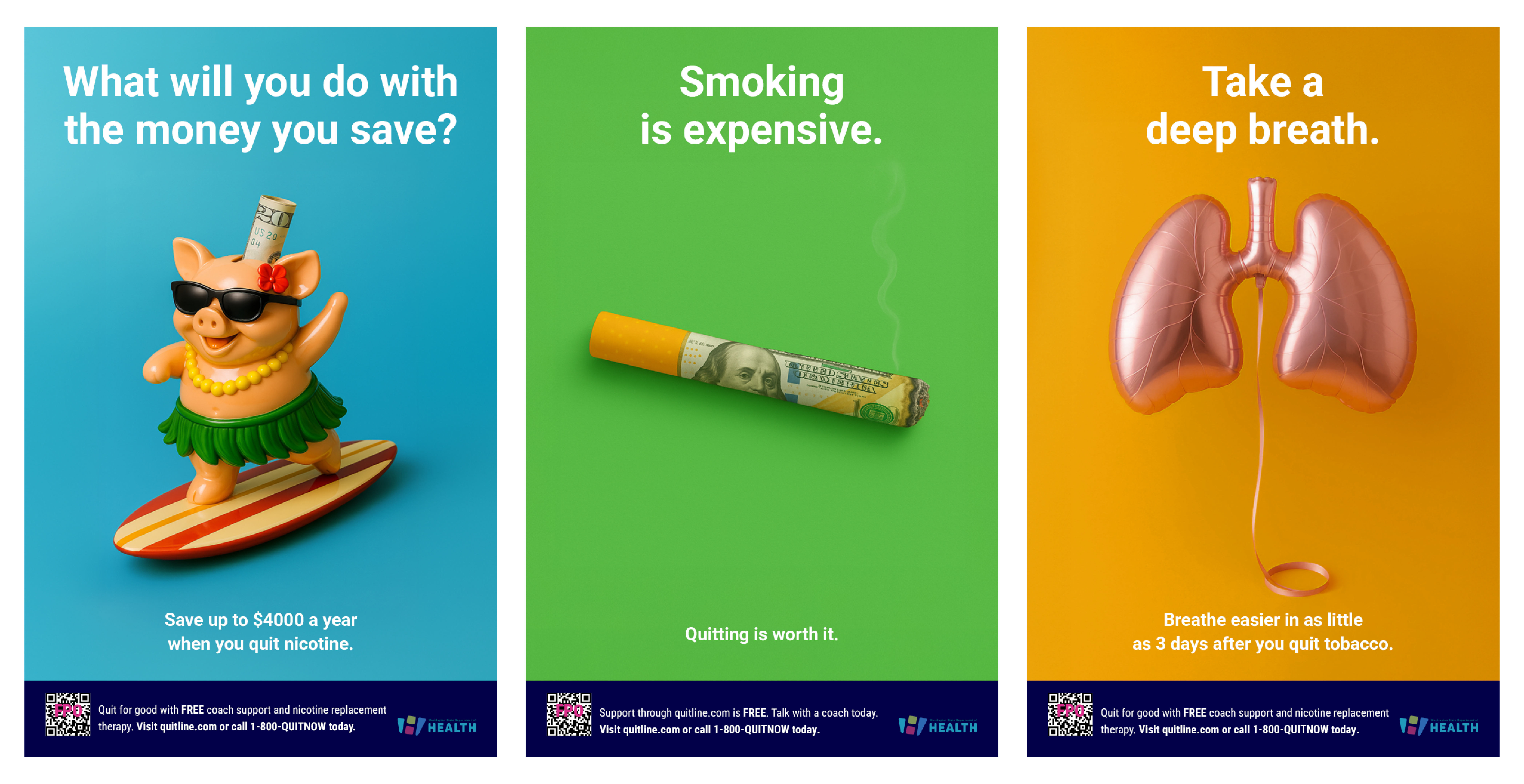
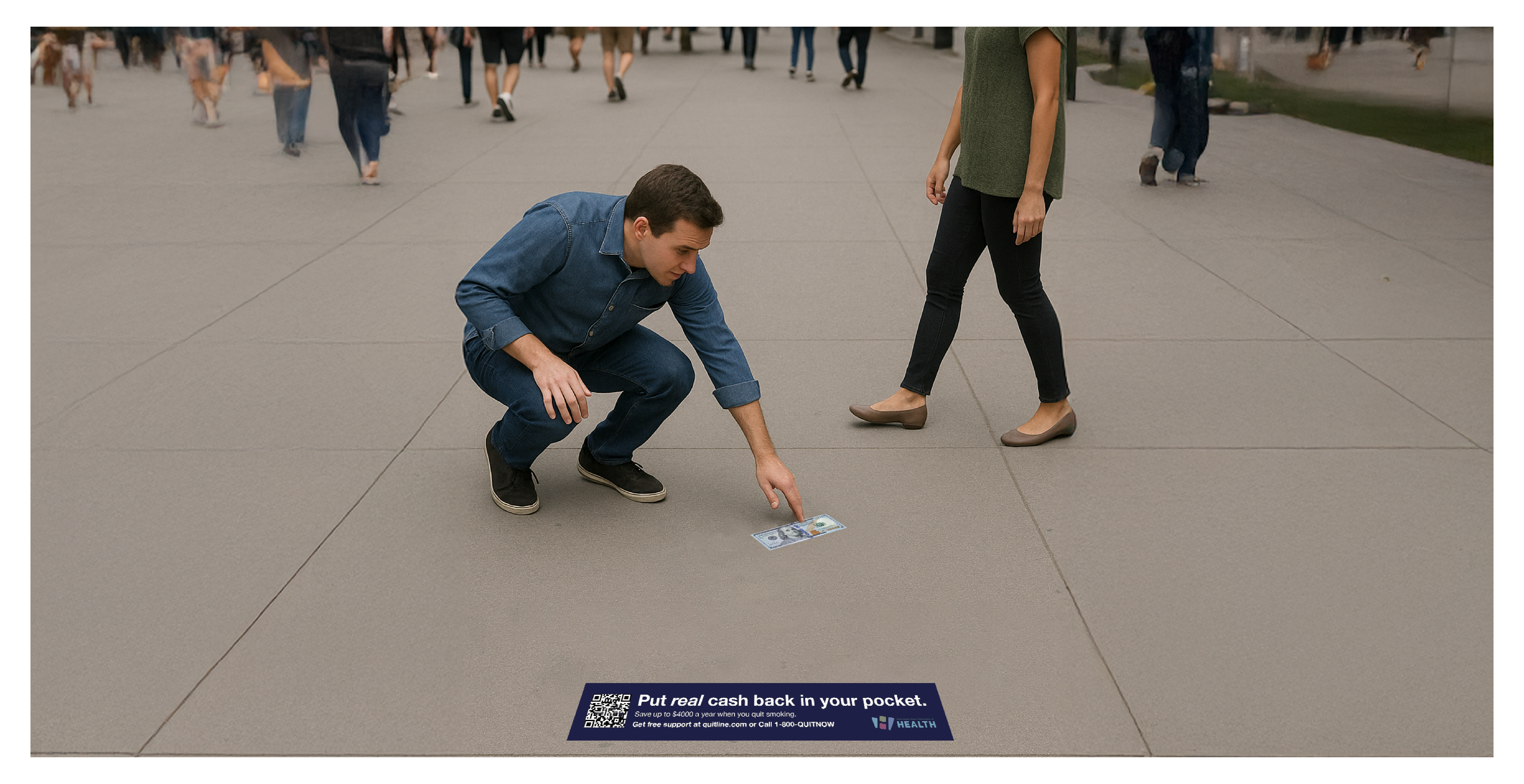
Led the creative direction for an out-of-home smoking cessation campaign for the Washington State Department of Health (WADOH), supporting Washington’s statewide Quitline services with bold, accessible messaging across high-traffic public spaces in Seattle.
The Challenge
WADOH approached the prevention team with an opportunity to promote free smoking cessation services and products, including nicotine gum and patches, through an OOH campaign placed in heavily trafficked environments such as train stations and pedestrian corridors. The campaign needed to be eye-catching, easy to understand at a glance, and inclusive of a broad audience. Initial direction leaned toward demographically targeted stock photography, paired with informational messaging and a clear call to action.
My Approach
I partnered closely with WADOH stakeholders and the RVO Health prevention team to push the work beyond expected public health norms.
Developed multiple campaign concepts designed for fast visual impact in transit-heavy environments.
Shifted the creative strategy away from demographic stock imagery toward a more humorous, text-forward approach that could resonate broadly without stereotyping or visual fatigue.
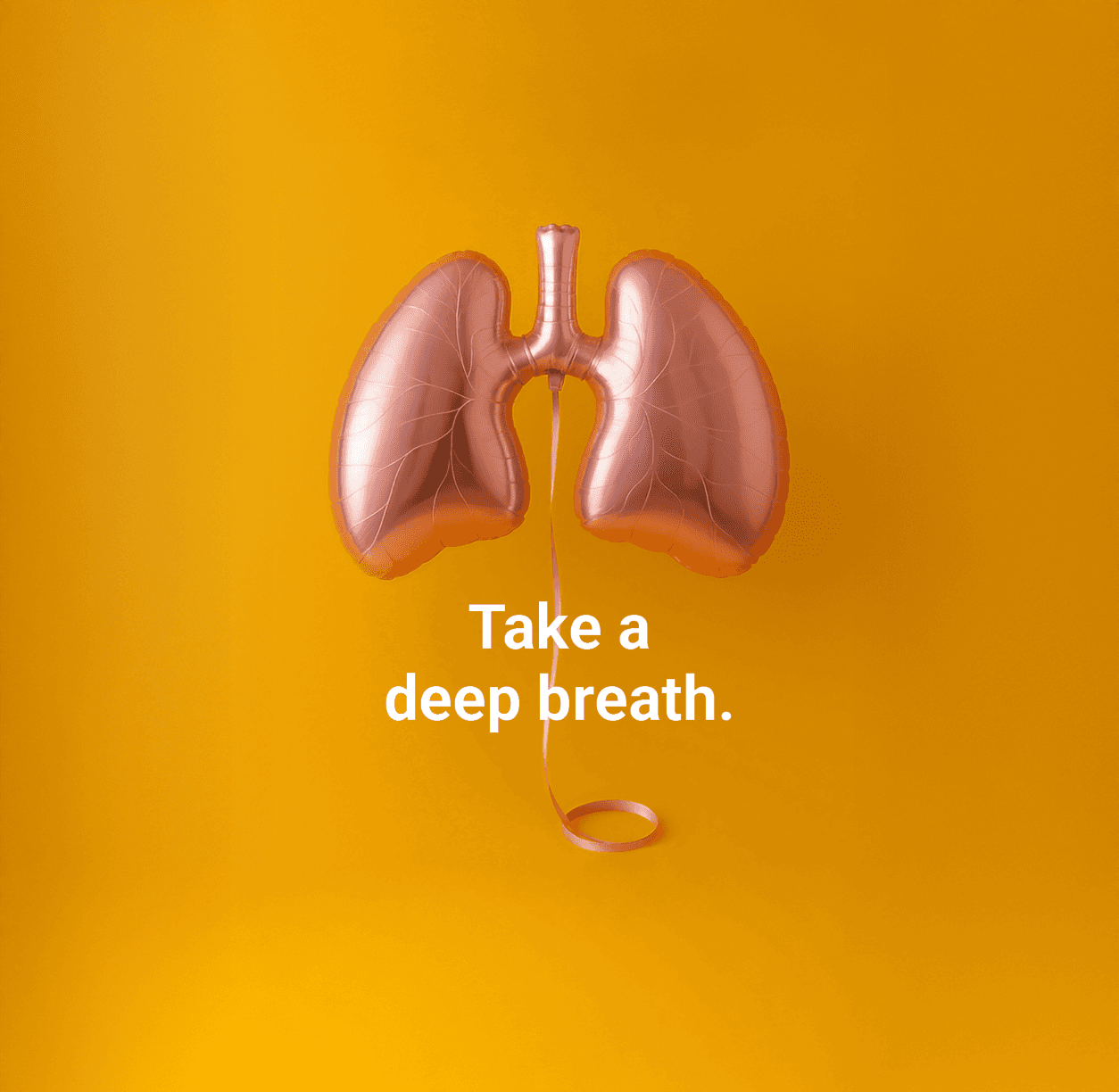
Advocated for minimalist, high-contrast designs using bold color and engaging copy to stop people in motion and invite curiosity.
Crafted clear calls to action that made it easy for viewers to understand how to access Quitline support and free cessation products.
Designed modular signage concepts that could scale across placements while remaining flexible for future extensions.
After presenting the concepts, WADOH aligned on the approach and approved the direction, recognizing that humor and simplicity could lower barriers and make the message feel more approachable.
The Outcome
The campaign concepts were well received by stakeholders and exceeded initial expectations. As a direct result of the success of the creative direction, the campaign budget was increased to allow for additional signage concepts and broader placement, expanding reach across the Seattle area. The final work delivered a distinctive, modern public health campaign that felt human, accessible, and effective in high-traffic urban settings — while reinforcing the availability and value of Washington’s Quitline services.